


Every couple of years, the internet collectively loses its mind over a color. In 2015 it was The Dress (white and gold, and I will die on this hill). Then Millennial Pink took over every throw pillow and coffee shop in America for roughly half a decade. Then Gen Z handed us Brat Green, which, lets be honest, was less a color and more a lifestyle.
But a few scientists at UC Berkeley managed to top all of them. They found a color nobody had ever seen. Like, ever. In the entire history of humans having eyes.
They named it "olo." And to see it, you basically have to let someone shoot a laser into your eyeball.
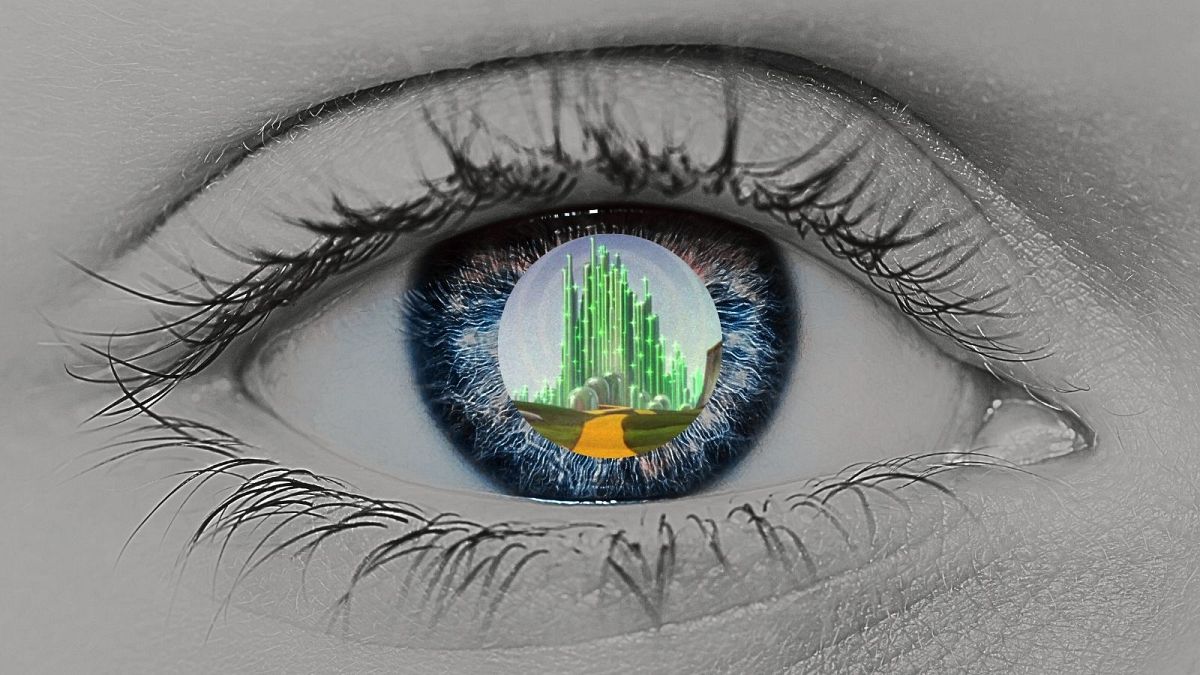
Okay, What Is Olo?
Olo is a blue-green—the people who've seen it describe it as a kind of teal or peacock green—but so intensely saturated that nothing in the real world comes close. Not a hummingbird feather, not a tropical lagoon, not the most aggressive highlighter in your junk drawer.
The team, led by vision scientist Austin Roorda and computer scientist Ren Ng, published the work in Science Advances. Only five people have seen genuine olo so far and two of them were the scientists running the study, which is honestly the most relatable thing I've ever heard. If I invented a new color, I'd also be first in line.
The whole project started with Ng asking Roorda a pretty great question: what would happen if you sent light to only the green-sensing cells in the eye? "Would it be the greenest green you've ever seen?" Turns out, kind of yes. And also kind of… something else entirely.

How Do We See Color in the First Place?
Quick biology class. I promise it's painless.
The back of your eye, the retina, is lined with light-sensitive cells. The ones in charge of color are called cones, and you've got three types:
• S cones pick up short wavelengths — mostly blues.
• M cones pick up medium wavelengths — mostly greens.
• L cones pick up long wavelengths — mostly reds.
Every color you've ever seen is your brain reading how hard each type of cone is firing compared to the others. It's less like a camera and more like a group chat where three friends report back and your brain decides what happened.
Here's the catch: M and L cones overlap a LOT. Any natural light that tickles your green-sensing M cones also tickles your red-sensing L cones at least a little. So you've never actually received a "pure green" signal. Nobody has. There's no wavelength of light on Earth that can do it.

So How Did They Pull It Off?
With a system they call "Oz" (yes, as in the Emerald City—scientists are nerds and I love them for it). First, they mapped the exact location of individual cones in a participant's retina. Then they used tiny, precisely aimed doses of laser light to hit only the M cones — up to about 1,000 of them at a time—while tracking the eye's tiny movements in real time so they didn't miss.
The result was a signal the human brain had literally never gotten before. Even the name is nerdy: it comes from the binary 010—L off, M on, S off. Love it.
And before anyone asks: no, you can't buy an olo paint swatch, and no, you can't see it on your phone. Any "olo" picture you find online is just a regular teal in a costume. Sorry.

Cool Science Fact. Why Does It Matter for My House?
Because olo is a really dramatic reminder of something that's happening in your living room every single day: what you see isn't just the object. It's the object, plus the light hitting it, plus your cones interpreting the whole mess.
Change the light, and you change the color. That's why the paint sample you loved in the store looks like wet cardboard once it's on your wall. It's why your "navy" pants turn out to be black the second you walk outside. And it's why your kitchen backsplash looks gorgeous at 9 AM and kind of depressing at 9 PM.
Lighting people have a number for this: CRI, or Color Rendering Index. In plain English, it's a score from 0 to 100 for how accurately a light shows colors compared to natural daylight. Sunlight scores 100. A lot of cheap bulbs sit around 80, which is how you get muddy reds, slightly gray skin, and dinner that looks like it came out of a gas station hot case. Bulbs at 90 or above show colors much closer to how they really look.
The Big Takeaway
Olo makes for a fun headline, but the bigger story is kind of beautiful: color isn't really "out there." It's a collaboration between light, objects, and the squishy biology in the back of your eyes. Scientists had to hack that system with lasers to find something brand new—but you can change what you see every day just by choosing better light.
All comments 0