


If you’ve ever stood in the light bulb aisle holding a box, squinting at “BR30” and “BR40” wondering what that even means, you’re not alone. This is actually one of the most Googled lighting questions, and somehow most of the answers still manage to be confusing.
Let me fix that.
What Does BR Even Mean?
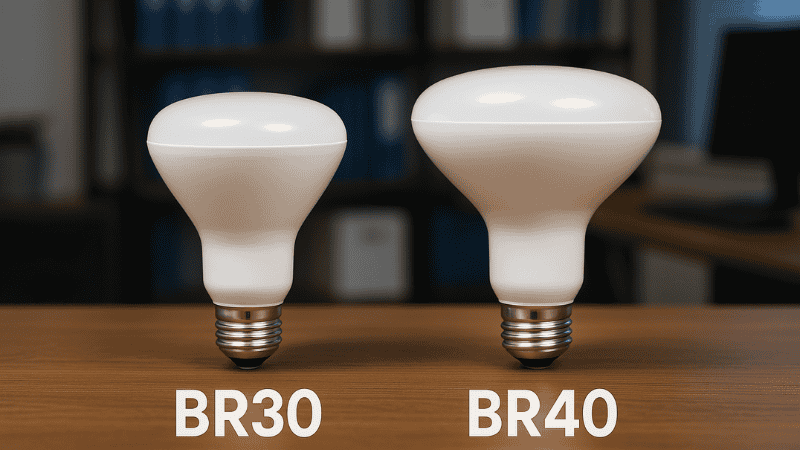
BR stands for Bulged Reflector. The bulge is the rounded shape of the bulb, and the reflector is the coating inside that directs light downward and outward instead of scattering it everywhere. This makes BR bulbs specifically designed for recessed lighting, track lighting, and downlights—any applications where you want a focused, directed beam rather than light going in every direction.
The number after BR tells you the diameter of the bulb in eighths of an inch. So, a BR30 is 30 ÷ 8 = 3.75 inches across. A BR40 is 40 ÷ 8 = 5 inches across. That’s it. That’s the whole mystery. You’re welcome.
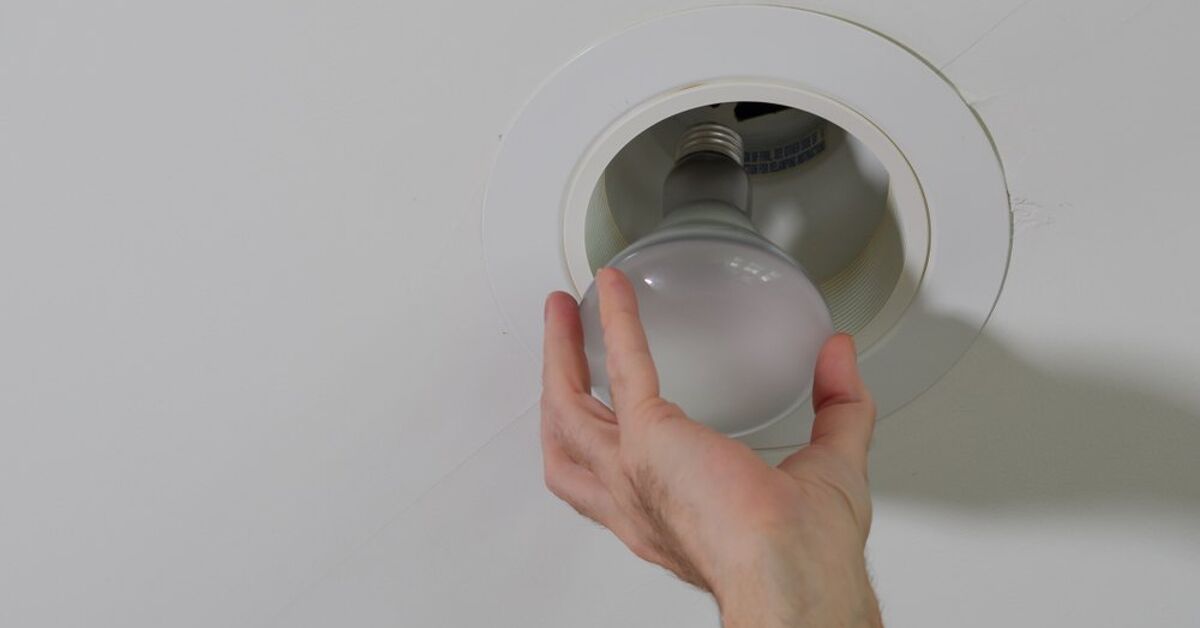
The Most Important Question: What Size Is Your Can?
Before you think about anything else, like brightness, color temperature, wattage, you need to figure out what size recessed can you have. This is the decision-maker.
Most residential and light commercial recessed cans come in three sizes: 4-inch, 5-inch, and 6-inch. Here’s how BR bulbs map to them:
· 4-inch can: Neither a BR30 nor a BR40 will fit. You’ll want a BR20, which is the smaller sibling in the family.
· 5-inch can: A BR30 fits well. A BR40 is too wide and simply will not go in.
· 6-inch can: Both will technically fit, but a BR30 will leave a visible gap around the edge that looks a little sloppy. The BR40 is made for 6-inch cans and fills the trim cleanly.
So really, for most people replacing bulbs in a standard 6-inch recessed fixture, the answer is BR40. But let’s keep going because brightness and ceiling height still matter.

Brightness: This Is Where BR40 Really Pulls Ahead
A standard Sunco BR30 puts out 850 lumens at 11 watts. Our BR40 puts out 1,400 lumens at 17 watts—that’s 65% more light for about 55% more energy. If you have high ceilings (above 9 or 10 feet), a living room with more than a couple of fixtures, or a kitchen where you actually need to see what you’re cooking, the BR40 is going to serve you better.
That said, Sunco also makes a high-output BR30 that delivers 1,200 lumens—and even a 1,600-lumen BR30 for spaces where you want serious brightness in a 5-inch fixture. So “BR30 = dim” isn’t the full picture. It just depends which BR30 you’re buying.

Beam Angle: Wider Isn’t Always Better
The BR40 has a 110-degree beam angle. The BR30 is slightly narrower, around 40–45 degrees depending on the model. A wider beam means more coverage — it spreads light across a larger area. For living rooms, open-plan spaces, or commercial interiors, that’s usually what you want.
But there are situations where a tighter beam works in your favor. Track lighting over artwork, accent lighting in a retail display, or a small hallway where you want focused illumination rather than wash — a BR30 can actually be the better call there. More focused, more directional, less spill.

Color Rendering: Here’s Something Most People Don’t Know
Sunco’s BR40 carries a CRI (Color Rendering Index) of 94+, while our standard BR30 is CRI 80+. CRI measures how accurately a light source renders color compared to natural daylight. A CRI of 94 means colors look incredibly true — important in spaces like retail, photography studios, kitchens, bathrooms, or anywhere you’re making color decisions.
If you’re lighting a clothing boutique, a restaurant, a salon, or anywhere that aesthetics matter, the BR40’s higher CRI is a real differentiator. For a garage, a utility closet, or a hallway, the 80+ CRI of the BR30 is perfectly fine.
Color Temperature: Both Give You Options
Both the BR30 and BR40 from Sunco are available in a range of color temperatures — from 2700K soft white all the way to 6000K daylight. We also offer selectable CCT versions for both, which means one bulb can switch between multiple color temperatures at the flip of a switch during installation. If you’re ever unsure what temperature a space needs, the selectable version is a lifesaver.
Living rooms and bedrooms: 2700K or 3000K
Kitchens, offices, and workspaces: 4000K or 5000K
Task lighting, garages, and commercial spaces: 5000K or 6000K

The Quick Decision Guide
Here’s the part you’re going to want to screenshot and save for later:
Choose a BR30 if you have a 5-inch recessed can, if you need track or accent lighting with a tighter beam, or if you’re working in a smaller, lower-ceilinged space where 850–1,200 lumens is plenty.
Choose a BR40 if you have a 6-inch recessed can (which is most people), if you have high ceilings or a large room that needs more coverage, if color accuracy matters in the space, or if you want the cleanest-looking fit in a standard recessed fixture.
Both options are dimmable, both are damp rated (so bathrooms and covered outdoor fixtures are fine), and both come with a 5-year warranty from Sunco. The price difference is minimal—BR30s start at $1.99, BR40s at $3.50. For a whole-house retrofit where you might be swapping out 20 or 30 bulbs, you’ll notice that difference, but you’ll also notice the difference in light quality every single day.

One More Thing
If you’re the kind of person who wants maximum flexibility and doesn’t want to commit to a color temperature until you see it in the actual space, check out Sunco’s selectable CCT versions of both the BR30 and BR40. You dial in the color temperature at installation and you’re done.
Lighting is one of those things that has an outsized impact on how a space looks and feels, and picking the right bulb doesn’t have to be complicated. Now you know exactly what to look for—and the next time you’re standing in front of a lighting display, you can walk out in under two minutes.
Shop Sunco BR30 bulbs and BR40 bulbs.
All comments 0