


So, you're mid-renovation. Maybe you've already picked your tile. You've argued with someone about the backsplash (you were right, by the way). You've got a contractor, a Pinterest board, and a vague sense of optimism. And then someone mentions something called Title 24-2025, and you realize you've never heard of it in your life.
Welcome to California.
I say that with love. California does regulations the way the rest of us do hobbies—enthusiastically, obsessively, and with an entire binder's worth of documentation. And honestly? Sometimes the regulations are good. This one's actually pretty reasonable. But that doesn't mean your builder bothered to explain it to you, which is how you ended up here, Googling it at 11pm between episodes of whatever you're currently watching.
Let me catch you up.

Okay, What Actually Changed?
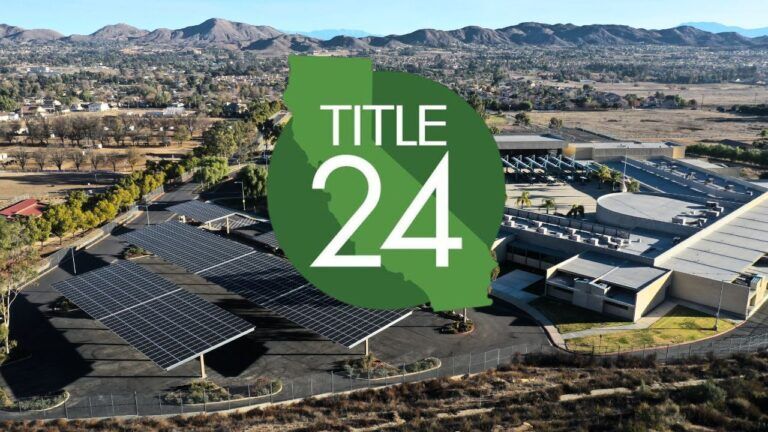
California's Title 24-2025—officially called the 2025 Building Energy Efficiency Standards—went into effect on January 1, 2026. If you pulled a permit on or after that date, you're playing by the new rules. Doesn't matter if you started planning last year. Permit date is the magic number.
The standards cover a lot of things (it's California, there are always a lot of things), but for homeowners and small business owners doing renovations or new builds, the lighting piece is the part that tends to catch people off guard.
California now has stricter requirements for how much energy your lighting uses, and how your lighting responds to daylight.
Daylight Control Is Kind of a Big Deal
If you have an enclosed space with 75 watts or more of general lighting, and that space has windows or skylights nearby, what the code calls a "daylit zone” you now need automatic daylight-responsive controls. Meaning, your lights have to talk to the sun.
These controls continuously dim your lighting from 100% down to 10% based on how much natural light is coming in. So, on a bright Tuesday when your kitchen is flooded with afternoon light, your fixtures should already be pulling back. On a gray January morning, they ramp up. The system does it automatically.
You still get manual on/off controls for each space, but here's a small update that's actually kind of nice: those controls can now be located in-space or remotely with annunciators. More flexibility than the old rules. Baby steps.

And Then There's the Power Density Stuff
This one's a little more technical but stay with me, because it affects what you can actually install.
Lighting Power Density (or LPD, if you want to sound like you know things at your permit office) is basically a cap on how many watts of lighting you can have per square foot. Think of it as a speed limit for your light fixtures.
The new standards tightened those limits:
• Offices: dropped from 0.75 W/sqft down to 0.65 W/sqft
• Retail spaces: dropped from 1.0 W/sqft down to 0.9 W/sqft
For homeowners doing a standard renovation, LPD isn't always the headline issue—but if you're building a home office, converting a garage, or doing any kind of commercial-adjacent project, it matters. And if you're a small business owner pulling permits for a buildout? This is very much your problem now.

Why Should You Care If You're Just Doing a Kitchen Reno?
Fair question. Here's the thing: these rules apply to new construction and renovation projects that pull permits. So, if you're adding a room, finishing a basement, doing a significant remodel, you're in scope.
The average homeowner building or remodeling in California has genuinely no idea this affects their project. Builders know, or they're supposed to know. But "supposed to" and "actually explained it to their clients" are two very different things. So, you end up making lighting decisions without realizing that some of those choices might not pass inspection.
And then you find out at inspection.
Which is the most California experience imaginable, honestly.

What This Means for Your Lighting Choices
If you're in a daylit zone and you're installing new lighting under a permit, you need fixtures that can dim. Not just "technically dimmable with the right bulb" dimming. Real, continuous dimming from full brightness down to 10%. That means:
• Dimmable LED fixtures (not every LED is dimmable so check the label)
• A compatible dimmer switch that works with those specific LEDs
• A daylight sensor if your space hits that 75W threshold near windows or skylights
• Manual controls that are code-compliant for your layout
This sounds like a lot of coordination because it is a lot of coordination. The good news is that dimmable LEDs are more accessible than ever, and a lot of the compliance burden falls on your electrician and contractor if they know what they're doing.
If you want a place to start, Sunco has a whole line of dimmable LED fixtures designed specifically to meet these kinds of standards—Title 24 compliant, compatible with most standard dimmers, and not outrageously priced. Not a hard sell. I just know that "find a compliant dimmable LED" feels like a treasure hunt sometimes, and having somewhere to start is genuinely useful.

California Sets the Floor for Everyone Eventually
Here's something worth knowing even if you don't live in California: Title 24 has a way of becoming the de facto national standard over time. California is the strictest in the country on building energy codes, and manufacturers and builders tend to align products around California compliance because it's easier than making two versions of everything.
What California requires today, other states often adopt in the next cycle. Millennials who remember when low-flow showerheads felt radical can confirm that today's regulations have a way of becoming tomorrow's normal.
So even if you're in Colorado or Florida right now, paying attention to what California is doing is a reasonable preview of where things are headed.
The Part Where I Tell You What You Should Do
If you're in California and you've got a project with permits in 2026:
1. Ask your contractor directly whether your lighting plan is Title 24-2025 compliant. Make them say yes out loud.
2. Identify your daylit zones — any space within 2.5 times the window height from an exterior window counts.
3. Make sure your fixtures are dimmable — not just the bulb, the whole system including the dimmer.
4. Confirm your electrician knows about the daylight sensor requirement if you're in a 75W+ daylit zone.
5. Check LPD if you're doing a commercial or commercial-adjacent space — your designer or contractor should be able to calculate this.
It's not actually that complicated once you know what questions to ask. The hard part is knowing to ask them at all.
California is going to keep being California. But you can be the person who knew about it ahead of time, which honestly feels like a win these days.
All comments 0