


For decades, the construction industry's relationship with technology could be summarized as: enthusiastic in brochures, cautious in practice. Every few years there'd be a wave of headlines about how robots were going to transform the jobsite, followed by a long quiet period where nothing much changes and people keep doing things the way they've always done them.
2026 feels different. And if you work in construction, electrical, or building trades, it's worth understanding what's changing versus what's still a press release.

What 'Physical AI' Actually Means
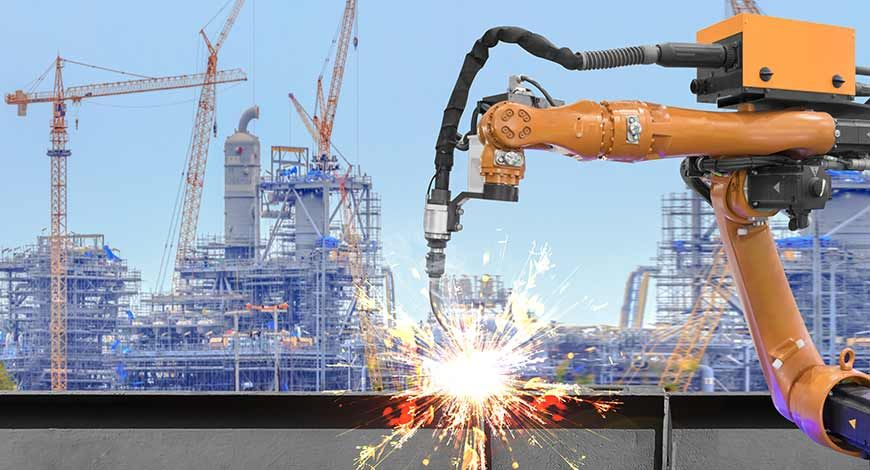
The buzzword right now is “physical AI”—which sounds like marketing but there is a pretty meaningful distinction. Traditional construction automation was about machines following pre-programmed paths. A robot arm that welds the same spot the same way, every time, under controlled conditions. Useful, but limited.
Physical AI is different. These are systems that perceive their environment in real time, make decisions, and adapt. Think of a dozer that uses GPS and LiDAR to grade terrain to within a centimeter of a digital blueprint—without a human operator in the cab. Or an excavation system that can read site conditions and adjust its approach. Or a camera that watches a jobsite continuously and flags safety violations as they happen, before someone gets hurt.
Gartner listed physical AI as one of its top technology trends for 2026. Built Robotics expanded its AI-driven excavation systems in March. Doosan Bobcat unveiled the autonomous RX3 loader. Caterpillar and Komatsu are deploying fully autonomous dozers on active job sites. This is not vaporware anymore.

What's Real Right Now
Here's an honest breakdown of where AI is actually making an impact on construction in 2026 versus where it's still aspirational:
Real and deployed:
• Autonomous grading and earthmoving — GPS/LiDAR-guided dozers and excavators operating on large sites
• Computer vision safety monitoring — cameras that detect workers without hard hats, people in exclusion zones, equipment too close to edges
• AI estimating and takeoff software — tools that read blueprints and generate material lists, dramatically faster than manual methods
• Reality capture — drones and cameras that compare as-planned vs. as-built conditions automatically, flagging deviations
Still mostly pilot programs:
• Autonomous bricklaying and framing robots
• Fully autonomous multi-trade coordination on complex sites
• AI-driven project scheduling that actually replaces human judgment What It Actually Means for the Trades
The honest answer is: it depends on the trade. And the timeline matters a lot.
For heavy equipment operators, the long-term picture is genuinely challenging. Autonomous grading machines are already doing work that used to require skilled operators on large infrastructure and earthmoving projects. That's not going to reverse. But 'challenging long-term' is different from 'your job is gone next year'—these systems still need humans to set them up, supervise them, maintain them, and handle anything that falls outside their training.
For electricians, plumbers, and finish trades, the picture is much more stable. The work is too varied, too physically complex, and too dependent on judgment calls for automation to make serious inroads in the near term. If anything, the construction AI boom is creating more electrical work; Every autonomous machine, smart sensor, and connected building system needs to be wired by someone.
Across the industry, the shift has been that workers are spending less time on paperwork and coordination, and more time on skilled work. AI handles the estimating, the scheduling updates, the safety documentation. The human does the thing that requires a human.
The Reskilling Reality
The framing that's gaining traction in the industry is 'robot operator' as a job title—someone who manages a fleet of three or four automated units from a tablet rather than operating a single machine manually. It's a real shift in what the job looks like, even if the underlying work (moving earth, building things) is the same.
That's actually not a terrible outcome for workers who adapt. Managing autonomous equipment pays well, requires real expertise, and is in short supply. The problem is the transition—the workers who are best at operating today's machines aren't automatically the best at supervising tomorrow's autonomous versions, and retraining takes time and investment.
Google's $50 million bet on electrician training (announced this month) is part of a broader pattern: the industry knows it needs more people, smarter people, and people trained for a different version of the job than existed ten years ago.

The Bottom Line
Construction AI is real, it's accelerating, and it's going to keep changing what jobsites look like. The 'robots replace everyone' narrative is still overblown—the industry is too complex, too variable, and too dependent on skilled human judgment for that to happen quickly. But the 'nothing is really changing' narrative is also wrong.
What's actually happening is a restructuring: some roles will shrink, others will grow, and almost every role will change in what it requires day to day. The workers and companies that pay attention to where that's going—and invest in skills accordingly—will be in a very different position than the ones who don't.
The excavator operator isn't gone. But they might be running two excavators from a tablet by 2030.
All comments 0