


I’ll be honest with you: the first time I heard someone use the phrase “digital twin” in a construction context, I assumed it was one of those tech buzzwords that consultants love, and job site workers ignore for about five years until it quietly goes away.
It did not quietly go away.
In fact, if you’re an electrical contractor working on mid-to-large commercial projects, there’s a decent chance you’re already being asked about it, or you will be soon. Over two-thirds of owners now contractually require contractors to use digital documentation systems on their projects. The U.S. General Services Administration has mandated “Single Source of Truth” workflows through its latest BIM standards. And the global digital twin market is projected to hit $48.2 billion by the end of this year.
So, let’s actually talk about what this is, why it matters for electrical work specifically, and what you need to know to not get left behind.
Okay, But What Actually Is a Digital Twin?
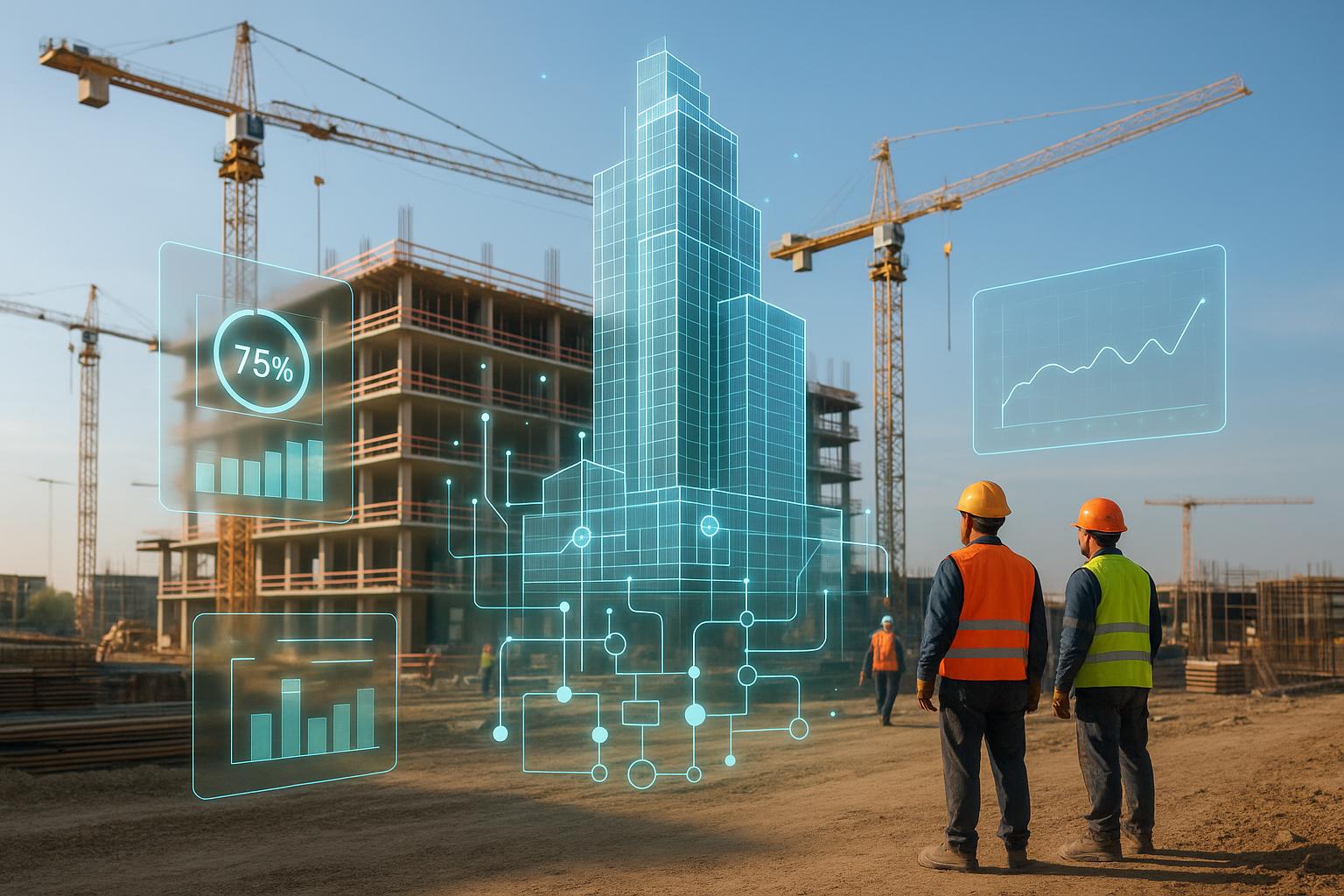
A digital twin is a live, continuously updated virtual replica of a physical asset. In this case it’s a building or a system within that replica. This isn’t the same as a static CAD file, blueprint, or even a traditional BIM model (which is really just a very sophisticated 3D snapshot).
A digital twin is connected. It pulls in real-time data from sensors, IoT devices, and monitoring systems attached to the physical building. If a circuit is drawing more power than expected, the twin knows. If an HVAC unit is running hot, the twin knows. If you want to model what happens to the electrical load when you add ten EV charging stations to a parking structure, you run it in the twin first before you touch a single wire.
Think of it like the difference between a photograph of your job site and a live security feed. Both show you the building. One shows you what it was. The other shows you what it is, right now, and what it might become with just a little interaction.

Why Does This Specifically Matter for Electricians?
Here’s where it gets interesting for anyone in the electrical trades, because the applications aren’t theoretical—they’re already showing up on job sites.
The first place it hits is pre-construction coordination. When the mechanical, electrical, and plumbing models all live in one unified digital environment, you can identify clashes before anyone picks up a drill. We’re talking about catching 95% of spatial conflicts before framing even begins—the conduit runs that would have collided with ductwork, the panel location that would have blocked a structural beam, the junction box that ended up exactly where a sprinkler head needed to go. Every one of those conflicts caught in the model is a change order you didn’t have to write, a wall you didn’t have to open back up, and a conversation with the GC you didn’t have to have at 7am on a Tuesday.
The data backs this up. Projects using digital twin coordination have reported up to 12% reduction in material waste through more accurate takeoffs, and project timelines cut by 20% through better trade sequencing. In a world where tariffs are already jacking up material costs and labor shortages are making scheduling a puzzle, those numbers matter.

The second application is handoff documentation. When a project wraps, the digital twin becomes a living record of exactly what was installed, where, and in what condition. For building owners, that’s a massive asset—they can troubleshoot systems, plan maintenance, and manage warranties without digging through binders of shop drawings. For electrical contractors, it’s a way to demonstrate value beyond the installation itself. You’re not just pulling wire and moving on. You’re handing over a documented, queryable record of everything you built.
The third is where the career trajectory goes. Electrical contractors who understand digital twins are increasingly being brought in not just as installers, but as systems integrators. The building is built. The twin is running. Someone needs to manage the data layer, interpret what the sensors are telling them, and make recommendations to the owner. That someone used to be a facilities management consultant. Increasingly, it’s the electrical contractor who built the system and knows it best.
This Sounds Expensive and Complicated. Is It?
It can be, but it doesn’t have to be. The entry point for most electrical contractors isn’t building a digital twin from scratch, but rather it’s contributing your scope to one that the GC or owner is already managing. That means submitting your as-built documentation in a compatible format (usually an IFC file or a Revit model), attaching your equipment data in a structured way, and being able to communicate with whoever is managing the overall model.
The tools have also gotten significantly more accessible. Platforms like Trimble, Procore, and Matterport have built interfaces specifically for subcontractors. You don’t need a PhD in computational design. You just need to understand what you’re being asked to deliver and how to deliver it in the right format.
If you’re a smaller shop that mostly does residential and light commercial work, this may not be on your radar for another few years. But if you’re doing any work on commercial builds over a certain size, healthcare facilities, data centers, industrial projects, or government contracts, you need to at least understand the conversation. Because the owners running those projects aren’t asking anymore. They’re requiring.

What Should You Actually Do About This?
Start by getting familiar with BIM (Building Information Modeling) if you aren’t already. BIM is the foundation that digital twins are built on. ELECTRI International has published research specifically for electrical contractors on digital twin implementation, and it’s worth the read. The National Electrical Contractors Association (NECA) has also been rolling out training programs on model-based workflows.
If you want to test the waters on a real project, ask your next GC whether they’re using a model-based approach and what format they need your documentation in. Ask what sensors, if any, will be left in the building post-construction and whether the electrical scope is expected to support them. Those two questions alone will tell you how far along that particular owner and GC are—and will signal to them that you’re thinking about it too.
The contractors who figure this out early are going to be the ones getting called for the projects that actually pay well. The digital twin is no longer a pilot program or a luxury feature on high-end builds. It’s becoming the baseline, and the baseline keeps moving.
All comments 0